Further Resources and Reading
A directory of trusted external organisations, charities and websites, organised by topic, to support you alongside the guidance on this site.
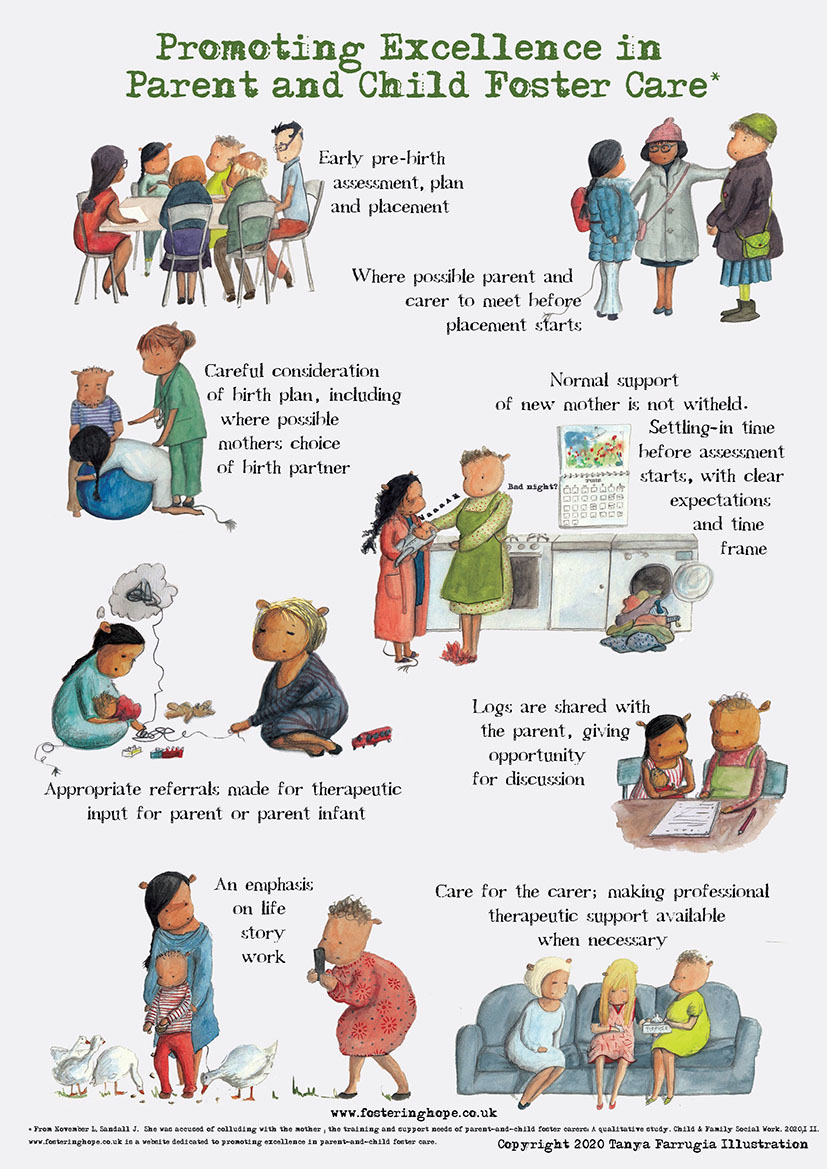
Download
our best practice recommendations poster
Good Beginnings, Getting Off To A Good Start
- Social workers watch your language — SWHelper
- Social care jargon buster — Social care institute for excellence
- Social care jargon buster — MENCAP
Supporting Pregnancy, Birth and Early Attachment
- NHS Your pregnancy and baby guide is a good starting place for most topics
- The charity Best Beginnings has a great section on helping vulnerable families, and their award-winning Baby Buddy app is full of helpful information and films
- Tommy's baby charity has a wealth of the latest information as well as a free Pregnancy Helpline
Alcohol in pregnancy and Fetal Alcohol Syndrome
Diabetes and pregnancy
Diet and pregnancy
- Eating disorders and pregnancy website: supporting pregnant women and mothers with eating disorders
- Healthy Start (food and vitamin vouchers)
Immunisations for pregnant women
Infections in pregnancy
- NHS Infections in pregnancy that may affect your baby
- CMV Action website. Information about cytomegalovirus
- Group B Strep Support website
Feeling baby's movements in pregnancy
Miscarriage
- The Miscarriage Association with resources for young people including easy read and several languages
Mouth and dental health in pregnancy
- NHS Teeth and gums in pregnancy and 'find a dentist near you' tool
- NHS Scotland. Oral health in pregnancy
- Pregnancy Sickness Support. Oral hygiene and pregnancy sickness
Physical activity in pregnancy
- Fabulous new website helping pregnant women and new mums stay active. This Mum Moves
- The latest advice on physical activity in pregnancy
Problems in pregnancy
- NHS choices. Pregnancy conditions
- MAMA Academy. Pregnancy Conditions
- Pregnancy sickness support website
- Action on Pre-eclampsia website
- ICP website (obstetric cholestasis)
Problems with pelvic pain before and after birth
Smoking in pregnancy
- Tommy's. Smoking and pregnancy
- NHS Smokefree website
- NHS Smokefree. Protect your baby from second-hand smoke
Tests in pregnancy
- Screening tests for you and your baby. Leaflet in 12 languages — NHS Screening in pregnancy
Weight in pregnancy
After birth adviceFeeding and skin-to-skin
- NHS/UNICEF leaflet 'Off to the best start'
- NHS Start4Life breastfeeding
- The Breastfeeding Network. Breastfeeding helplines including in Polish, Welsh, Bengali and Sylheti
- Best Beginnings. From Bump to Breastfeeding. Short films about breastfeeding
- NHS Breastfeeding and alcohol
- UNICEF Baby Friendly resources
- The Breastfeeding Network. Drugs in breastfeeding
- NCT 'Reasons to be proud'
- NCT 'What's in a nappy?' How to know your baby is feeding well
- Bliss. Skin-to-skin and kangaroo care
- NHS Bottle feeding your baby
- Infant formula and responsive bottle feeding – Baby Friendly Initiative (unicef.org.uk)
Contraception
Recognising an unwell baby
- NHS Does your child have a serious illness?
- Baby and child first aid app. British Red Cross
- Sepsis Trust — what is Sepsis and how do I spot it? Information for parents
- NHS New born jaundice
- NHS Tongue tie
Bedsharing and safe sleeping
Special care unit babies
Support Good Enough Parenting
Supporting Parents with Mental Ill-Health
- Perinatal and infant mental health: what is it and why it matters. Institute of Health Visiting
- Useful list of questions to ask at a GP (NICE guidelines)
- Eating disorders and pregnancy website
- BEAT: Eating disorders support charity with helpline
- Action on postpartum psychosis
- MIND. Postnatal depression and perinatal mental health
- PANDA (Pre and Postnatal Depression Advice and Support)
- Tommy's website. Mental wellbeing
Supporting Parents with Addictions
Supporting Parents with a Learning Disability, FASD or Autism
Resources for parents
Learning disability- Easyhealth.org.uk. Directory of easy read leaflets on many health and lifestyle topics
- Change people.org. Charity with training, advice and support for parents with learning difficulties
- Baby Buddy app
- Your Miscarriage. A leaflet with pictures
- Easy read information about online safety and grooming
- The meaning of different social services meetings
- Lana Grant autism consultancy
- Mothers with autism — Amelia Hill, The Guardian, April 2017
- National Autistic Society
- What are the signs of autism in girls?
- Working together with parents network. University of Bristol
- Good practice guidance on working with parents with a learning disability (2007)
- The invisible girls on the autistic spectrum. Blog
- National Autistic Society. Autism and Gender Identity
- Research paper: a qualitative study of the experience of maternity care for women with learning disability
Support Parents from Abusive Relationships
Supporting women who have experienced DV- The Freedom Programme Website
- National domestic violence helpline
- Women's Aid Website
- Refuge Website
- NSPCC child sexual exploitation
- Department for Education — Child sexual exploitation: definition and guide for practitioners (2017)
- Metropolitan Police webpage on CSE
- PACE (parents against child exploitation) website
Supporting Fathers and Couples
Support for fathers- Fatherhood Institute. A comprehensive list of online resources
- Postpartum psychosis. A guide for partners
- Postpartum psychosis: a guide for partners (PDF)
- Men and miscarriage leaflet — Miscarriage Association
- Being a new dad: juggling life as a new parent — NCT website
- Fathers and breastfeeding — NCT
- Pregnancy, birth and beyond for dads and partners — NHS
Positive Endings — Supporting Everyone Involved
- Pause is an excellent project available in some areas which offers women a supportive programme of self-development for around 18 months whilst committing to a long acting contraception.
- In this short documentary, mothers who have been separated from their children share their experiences.
- Vulnerable mothers and repeat care proceedings website: this project examined care proceedings cases in the family courts where mothers have had several children in a row removed from their care. It looked at the case files of 354 mothers and interviewed 72. The research found that over 11,000 mothers had more than one child removed between 2007 and 2014, and that these women had suffered high levels of abuse and neglect as children, with many having been in care themselves — 40% in foster care or children's homes. The mothers in the study often had their first child as teenagers and had complex issues including substance misuse, domestic violence and mental health difficulties, with very limited support available to recover from the trauma of having a child removed. The findings have since led to programmes supporting women who have had more than one child removed, giving them the opportunity to make lasting changes.